



Understanding WHY play matters
 Article
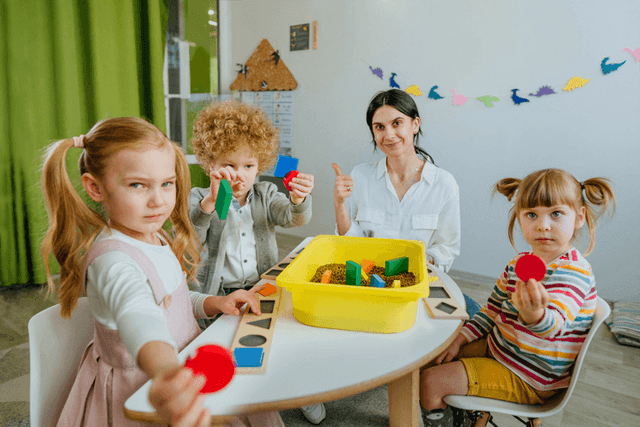
Watch a group of children playing and you might see blocks scattered across the floor, costumes hanging from chairs, mud pies being carefully prepared, or endless questions beginning with "Why?"
To an outsider, it may look simple.
Sometimes it even looks messy.But inside a child's mind, something remarkable is happening.
As adults, we often talk about play as though it is something children do between moments of learning. Yet for children, play is learning. It is how they make sense of the world, build relationships, test ideas, express emotions, and discover who they are.
Perhaps one of the greatest invitations for educators and families is to pause and ask a different question.
Not, "What are the children doing?"
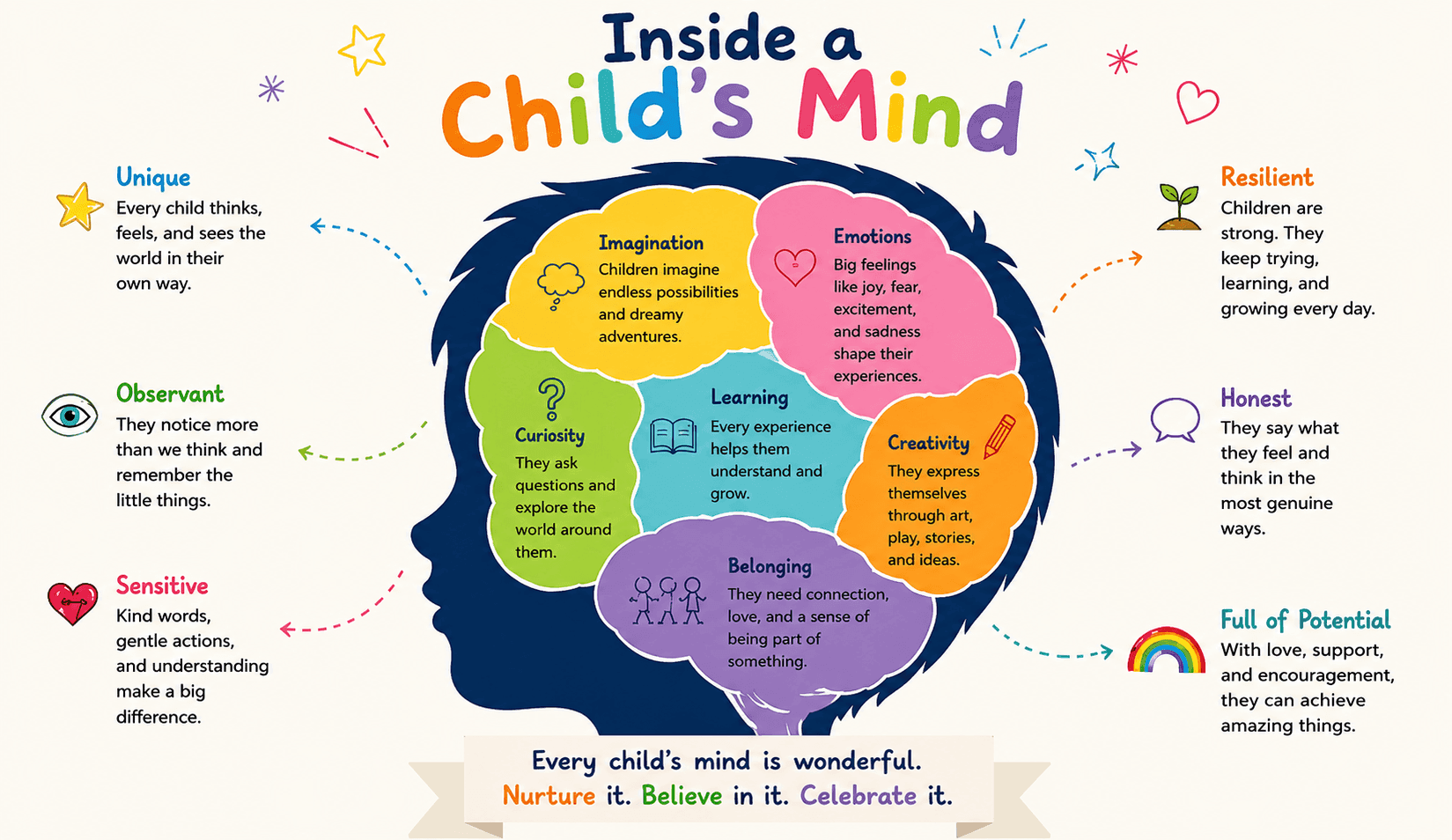
But rather, "What is happening inside their minds?"
Imagination: Where possibilities begin
Long before children write stories, they live them.
A cardboard box becomes a spaceship.
A stick becomes a magic wand.
A handful of leaves transforms into ingredients for a restaurant.
Imagination is not separate from learning; it is where innovation, creativity and problem-solving begin. Through pretend play, children explore possibilities, test ideas and rehearse futures that do not yet exist.
Curiosity: The engine of discovery
Why do worms live underground?
Can dinosaurs swim?
What would happen if I mixed these colours?
Children are naturally curious. They ask questions because they are driven by a desire to understand the world around them.
Play provides opportunities to investigate, experiment and wonder. It encourages children to predict, take risks, revise their thinking and make meaning from their experiences.
Curiosity is the foundation upon which lifelong learning is built.
Learning: More than academics
Learning through play is not accidental.
Every tower that collapses teaches persistence. Every puzzle develops problem-solving. Every disagreement provides opportunities for negotiation and empathy.
During play, children develop language, mathematical thinking, executive functions, physical coordination, and social and emotional skills. They are constantly observing, adapting, remembering, planning, and creating connections.
Creativity and belonging: A hundred ways to express ideas
Children communicate in countless ways.
Through storytelling.
Through music.
Through movement.
Through construction.
Through dramatic play.
As Loris Malaguzzi reminded us, children have a hundred languages through which they express themselves.
Play also helps children discover where they belong.
Friendships are formed.
Rules are negotiated.
Ideas are shared.
Communities are built.
When children feel safe, valued and connected, they are more willing to take risks, ask questions and embrace challenges.
Emotions: Big feelings matter
Joy, excitement, frustration, disappointment, pride and empathy.
These are not interruptions to learning. They are learning.
Play gives children opportunities to experience, understand and regulate emotions in authentic and meaningful ways.
A game that does not go as planned teaches resilience.
Sharing treasured resources encourages empathy.
Pretending to care for dolls or animals nurtures compassion.
Children do not leave their emotions at the door when they learn.
Children’s emotions shape how they experience the world.
Seeing play differently
The United Nations Convention on the Rights of the Child recognises play as a right, not a reward.
Yet in a world increasingly focused on outcomes and achievement, it can be tempting to view play as less important than "real learning." Perhaps it is time to shift our perspective.
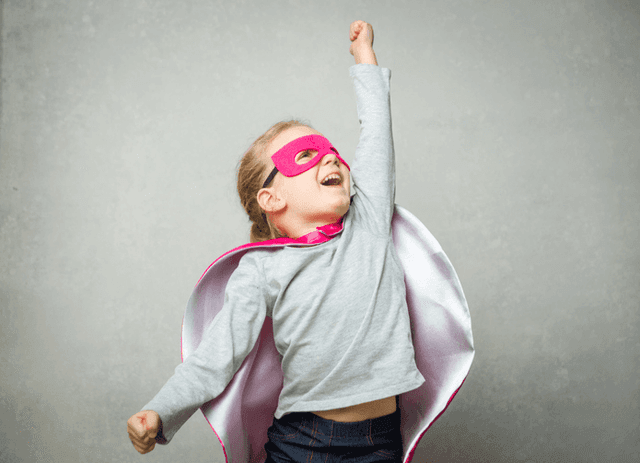
When we see children building cubby houses, digging in mud, dressing as superheroes, or creating imaginary worlds, we are witnessing much more than entertainment.
We are witnessing the extraordinary work taking place inside a child's mind.
We witness Imagination. Curiosity. Learning. Creativity. Belonging. Emotional growth.
When conversations change perspectives
Sometimes, all it takes is one conversation to help us see childhood differently.
When educators begin asking, "What is happening Inside a Child's Mind?", they start observing with greater intention.
When families understand what play is building, they begin to see everyday moments through a different lens.
A cardboard box is no longer just a box.
A tower that falls is no longer a failed attempt.
A disagreement between friends becomes an opportunity to learn empathy and resilience.
Simple moments that once appeared ordinary begin to look extraordinary.
Perhaps that is the real power of play.
Not only does it change children. It changes the adults who learn to see it.
It strengthens the partnership between educators and families by creating a shared language and a shared understanding of childhood.
Because when curiosity is shared, everyone grows.
Children, Families, Educators and Communities.
And perhaps that is what it truly means to say:
It takes a village to raise a child.
Our role is not to rush childhood.
Our role is to understand it.
To protect it.
To celebrate it.
And to never stop asking,
" What is happening Inside a Child's Mind “?
Research sparked curiosity.
Curiosity inspired conversations.
Conversations strengthened relationships.
And relationships changed perspectives.
And perhaps that is what it truly means to say:
It takes a village to raise a child.
Because if it takes a village to raise a child, perhaps it also takes a village to celebrate childhood itself.
Author:
Farah Junaid


Don’t miss a thing


Related Articles