



Meaningful notes: could music be one of early childhood education and care's most overlooked workforce strategies?
 Marketplace
Late on a Thursday afternoon in the toddler room, the atmosphere feels stretched.
One child cries because their best friend has already gone home. Another collapses dramatically after losing possession of a plastic dinosaur. An educator mentally juggles ratios, documentation, lunch clean-up and the eternal question of whether reheated coffee still counts as self-care.
Then, almost instinctively, someone starts singing.
Softly at first. A familiar rhythm.
A small hand taps a beat. A child sways. Someone giggles. The crying softens.
The room shifts.
No formal behaviour strategy has been introduced. No structured intervention takes place. Through rhythm, repetition, familiarity and shared participation, connection quietly returns.
This is the power of music in early childhood.
Not performance. Not perfection. Not specialist talent.
Connection.
More than a children's learning tool
Music is woven through early learning environments, often without educators consciously recognising its impact.
A pack-away song drifts across the room. A child invents lyrics during outdoor play. An educator hums while comforting an unsettled toddler. A familiar chant signals that lunchtime is approaching.
These moments may appear ordinary, yet they carry significant emotional and developmental value.
Research highlights strong links between music, emotional regulation, language development, memory and social connection. Shared musical experiences strengthen neural pathways associated with communication, attention and engagement.
Most educators, however, do not need research to tell them what they already observe every day.
Music changes the atmosphere of a room.
The child who struggles to participate in group experiences may confidently join through rhythm and movement. An anxious child relaxes during a familiar song. A dysregulated group begins listening, laughing and moving together.
Joy shifts learning.
Yet perhaps the most interesting question for the sector right now is not what music does for children.
It is what music might do for educators.
An overlooked workforce conversation
Across Australia, workforce shortages, educator wellbeing and retention remain among the most significant challenges facing early childhood education and care.
Much of the conversation understandably focuses on attracting new people into the profession. Equally important, however, is understanding what helps educators remain.
Workforce sustainability is not solely a recruitment challenge. It is also a wellbeing challenge.
Educators who feel connected to colleagues, supported by their workplace culture and valued in their role are more likely to experience professional satisfaction and remain engaged in their work.
While policy settings, funding initiatives and qualification pathways all play important roles, the everyday experiences that shape workplace culture matter too.
Music may not traditionally be viewed as a workforce strategy, yet it contributes to many of the conditions that help teams thrive.
Shared experiences create connection. Connection builds belonging. Belonging supports wellbeing.
In a profession built on relationships, those outcomes matter.
Creating emotional safety through music
Meaningful musical experiences do not require elaborate lesson plans or specialist equipment. Often, the most powerful moments are the simplest.
A whispered lullaby during rest time.
A rhythmic chant while washing hands.
A spontaneous song about missing shoes.
A clap-and-tap pattern invented by children.
These experiences communicate something profoundly important to young children: emotional safety and belonging.
Predictability plays a critical role in children's regulation. Familiar melodies and repeated rhythms help children anticipate what comes next, particularly during transitions, which are often among the most challenging parts of the day.
A familiar transition song can reduce the need for repeated verbal prompts because children already understand what the rhythm and lyrics represent. Their bodies often respond before their brains have fully processed the instruction.
Music also supports co-regulation.
Educators co-regulate constantly through tone of voice, facial expressions, pacing, movement and emotional presence. Music naturally combines all of these elements.
A calm singing voice can soothe heightened emotions. Shared rhythm can organise attention and movement. Musical experiences create synchrony, allowing children and adults to respond together both emotionally and physically.
Supporting inclusion and participation
Music offers multiple pathways into participation.
For children learning English as an additional language, music can provide a bridge into group experiences long before they feel confident communicating verbally. Other children may participate through movement, gesture or observation before gradually finding their voice.
Some children sing enthusiastically. Others watch quietly. Some move their bodies rather than using words.
Meaningful musical experiences create space for all of these responses.
This flexibility makes music a powerful tool for inclusion because there is no single correct way to participate.
Importantly, educators do not need to consider themselves musical to facilitate these experiences.
Many adults carry memories of being told they could not sing or lacked musical ability. Over time, music can become associated with performance rather than connection.
Children, however, are not searching for polished performers.
They are searching for participation.
A voice does not need to sound perfect to create comfort and belonging. Rhythm can be created through clapping, tapping, stomping, movement or simple repetition. Children respond far more strongly to warmth, authenticity and playfulness than technical skill.
Why music matters for educator wellbeing
Early childhood education and care is emotionally demanding work.
Educators support children through complex emotions while simultaneously managing routines, relationships, safety requirements, documentation and increasing professional responsibilities.
Within these pressures, joy can quietly disappear beneath responsibility.
Music has a unique capacity to reconnect educators with moments of creativity, playfulness and shared connection.
Group singing, movement and humour can reduce tension while strengthening relationships between children and adults. These experiences remind educators that they are not simply managing behaviour or completing tasks. They are building human relationships.
Through decades of working alongside early learning services, the Hey Dee Ho team has observed a consistent pattern. While children benefit from music and movement experiences, educators often benefit just as much.
The shared laughter, participation and connection generated during these moments frequently extend beyond the session itself, influencing interactions, relationships and the overall atmosphere within the service.
These outcomes may seem difficult to measure, but they are often easy to recognise.
A team that laughs together.
An educator who feels more connected to the children in their care.
A room that feels calmer, more engaged and more responsive.
These experiences contribute to the kind of workplace culture that supports both wellbeing and quality practice.
Aligning with the EYLF and NQS
Music aligns strongly with both the Early Years Learning Framework and the National Quality Standard.
Shared musical experiences support children's sense of identity, belonging and cultural connection through participation and relationship building. They encourage collaboration and social interaction, support emotional wellbeing and regulation, and strengthen communication and language development through rhythm, movement and expression.
Importantly, these outcomes emerge naturally through joyful engagement rather than heavily structured instruction.
Part of the relational fabric of the day
Music does not need to exist only during designated music sessions.
It can become part of the relational fabric of everyday practice.
Greeting songs can support positive arrivals. Rhythmic routines can ease transitions. Movement experiences can release energy after extended indoor periods. Soft humming can help calm emotionally heightened moments.
These seemingly small interactions often have the deepest impact because they occur consistently within trusted relationships.
Visiting music presenters may spend 30 minutes each week with children. Educators spend thousands of hours alongside them throughout the year.
If music can support joy, confidence, regulation and belonging within a short session, the possibilities become even greater when these experiences are intentionally embedded throughout the day.
Why music matters for educator wellbeing
Early childhood education and care is emotionally demanding work.
Educators support children through complex emotions while simultaneously managing routines, relationships, safety requirements, documentation and increasing professional responsibilities.
Within these pressures, joy can quietly disappear beneath responsibility.
Music has a unique capacity to reconnect educators with moments of creativity, playfulness and shared connection.
Group singing, movement and humour can reduce tension while strengthening relationships between children and adults. These experiences remind educators that they are not simply managing behaviour or completing tasks. They are building human relationships.
Through decades of working alongside early learning services, Hey Dee Ho Educational Services has observed a consistent pattern. While children benefit from music and movement experiences, educators often benefit just as much.
The shared laughter, participation and connection generated during Hey Dee Ho sessions frequently extends beyond the program itself, influencing interactions, relationships and the overall atmosphere within the service.
These outcomes may seem difficult to measure, but they are often easy to recognise.
A team that laughs together.
An educator who feels more connected to the children in their care.
A room that feels calmer, more engaged and more responsive.
These experiences contribute to the kind of workplace culture that supports both wellbeing and quality practice.
And revise the ending to:
Looking beyond recruitment
As the sector continues exploring solutions to workforce sustainability, perhaps it is worth asking a simple question.
If music can help build connection, belonging, confidence and joy for children, what might happen when services begin viewing it as a support for educators too?
The future of the sector will depend not only on attracting new educators, but also on creating environments where existing educators want to stay.
Sometimes the most powerful solutions are not new initiatives or complex programs.
Sometimes they are the everyday practices already happening within the room.
For services seeking practical ways to embed music, movement and connection into daily practice, Hey Dee Ho Educational Services offers programs designed specifically for early learning environments.
And sometimes, that work begins with something as simple as a song.
Sometimes the most powerful solutions are not new initiatives or complex programs.
Sometimes they are the everyday practices already happening within the room.
And sometimes they begin with something as simple as a song.
About Hey Dee Ho Educational Services
Hey Dee Ho Educational Services provides music, movement, yoga, fitness and drama programs for early childhood education and care services across Australia.
Authors
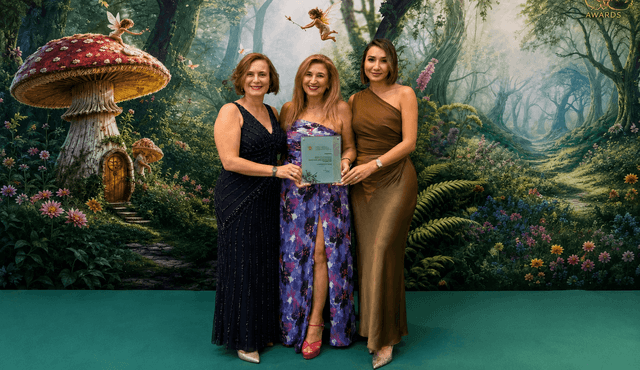
Melissa Smile is an early childhood specialist whose work explores psychology-informed approaches to music and movement that support regulation, connection and belonging in early learning environments.
Adam Isaacs is a music specialist, author and performer with extensive experience supporting educators to use music as a tool for connection, inclusion and engagement in early childhood education and care settings.
Don’t miss a thing

Related Articles