




Screen time alone may not predict developmental difficulties, new research suggests
 Article
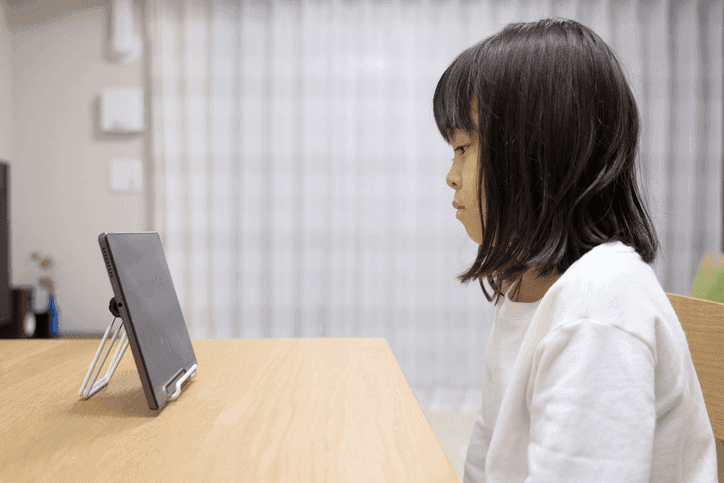
New international research has challenged assumptions about the relationship between children's screen use and development, finding no association between the amount of screen time and developmental difficulties at five or 10 years of age.
The study followed more than 3,000 children over a decade, with Australian experts saying the findings support a more nuanced conversation about children's use of technology.
However, researchers have also cautioned against applying the findings too broadly to children growing up today, given the significant changes in devices, digital content and algorithms since the study began.
Researchers spoke with families in the United Kingdom in 2009 and 2010 and followed children's development over the subsequent 10 years.
The research found no link between the duration of children's screen use and developmental difficulties at five or 10 years of age, although the findings were limited by the use of self-reported survey data.
Associate Professor David Armstrong from La Trobe University's School of Education told SBS News that parental fears about screen time were “unfounded and premature”.
He said the evidence about adverse effects on children's development remained mixed and noted that devices could also provide benefits for social development.
Associate Professor Armstrong described the research as robust and methodical and said it contributed to an emerging body of evidence supporting better use of screen time rather than simply less of it.
Other experts cautioned that the digital environment experienced by children today is substantially different from that experienced by children when the study began.
Professor Andrew Whitehouse, an autism researcher at The Kids Research Institute Australia, noted that the study commenced around the time the iPad was first released in Australia.
Smart devices subsequently became far more prevalent throughout childhood, meaning the experiences captured by the study may not reflect those of children growing up with today's technology.
Dr Sam Teague, an NHMRC Emerging Leadership Senior Research Fellow at James Cook University, also highlighted changes in the type of content available to children.
Dr Teague said contemporary content was increasingly targeted towards younger children and was often designed to maximise engagement rather than support learning and development.
She called for further longitudinal research following children growing up in today's digital environments.
The research also adds to discussion about whether measuring screen time by duration alone provides enough information to understand its potential impact.
Clinical psychologist Adam Guastella, who works with Sydney Children's Hospital at Westmead and the University of Sydney, told SBS News that screen time was not inherently harmful, with its effects on children's physical, cognitive and social development influenced by the content they engage with.
Technology can provide opportunities for learning, problem solving and developing skills, while repetitive activities without a functional purpose may offer fewer developmental benefits.
The impact may also depend on what screen use replaces.
Professor Guastella said that where children were missing developmental milestones or displaying antisocial behaviour, consideration should also be given to whether screen use had displaced activities such as reading, play, physical activity and face-to-face interaction.
Australian children aged five to 17 spend an average of two hours and 51 minutes each day engaged in sedentary recreational screen activity, according to Australian Bureau of Statistics data cited by SBS News.
Around one in four children meet national health guidelines recommending no more than two hours of sedentary recreational screen time each day, excluding homework.
Experts said digital activities should be balanced with opportunities for physical activity and in-person social connection.
Associate Professor Armstrong also cautioned against allowing debate about technology to overshadow social factors with established links to children's outcomes.
He pointed to poverty and marginalisation as significant determinants of children's development, arguing that public discussion about screen use and social media could become disproportionate to the evidence about their effects.
For early childhood education and care (ECEC) professionals, the findings add to a broader conversation about how digital technologies are used with children, rather than providing a case for abandoning limits or existing guidance around screen use.
The study does not establish that screen time is harmless, nor does it assess the full range of smart devices, platforms and algorithm-driven content children encounter today.
Instead, the findings suggest that duration alone may not provide a complete picture when considering children's digital experiences.
For educators and service leaders, this reinforces the value of considering the purpose and quality of digital experiences alongside opportunities for play, movement, relationships, exploration and social interaction.
Further details about the research and Australian experts' responses are available in the original SBS News report.

Don’t miss a thing




Related Articles