




From good intentions to daily practice: what cultural safety really looks like in early childhood
 Article
In early childhood education, we often speak about inclusion with genuine intent. We plan for it, we celebrate cultural diversity, acknowledge significant dates, and create opportunities for children to learn about different cultures recognising the important role this plays in shaping children’s sense of belonging.
However, a question I have been reflecting on more deeply is, is this enough?
Too often, cultural inclusion lives within our calendars NAIDOC Week, Harmony Day, special events rather than being embedded into our everyday practice. While these moments are important, cultural safety is not built through occasional experiences. It is shaped through what children see, hear, and feel every single day.
Cultural safety is experienced by children in the everyday, in what they hear, what they see, and how they feel within our environments.
Moving from Intention to Practice
Most educators bring strong intentions to create inclusive and respectful environments. The intention is there but the challenge lies in translating those intentions into consistent, meaningful practice.
This shift is not about adding more to the program. It is about rethinking how we:
- engage with children in daily interactions
- design and reflect on our environments
- build authentic relationships with families
- examine our own assumptions and perspectives
This requires a move from doing culture to embedding it within everyday practice.
What Cultural Safety Looks Like in Practice
In practice, cultural safety is subtle, consistent, and deeply relational. It is reflected in:
Everyday Interactions
Cultural safety lives in small, everyday moments.
I’ve noticed that it’s often not in planned experiences, but in how educators respond, speak, and connect.
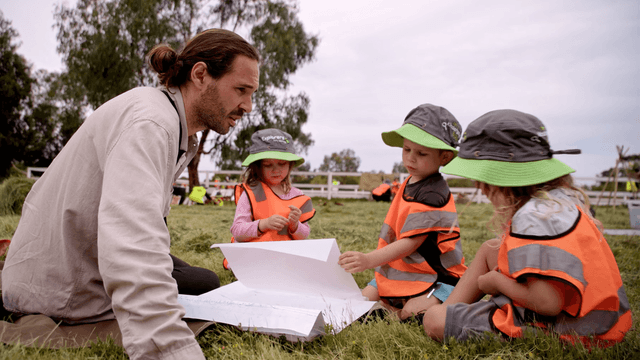
In one moment during outdoor play, an educator gently reminded children, "We take care of this space because this is Country."
It wasn’t a lesson. It was part of the conversation. Those moments stay with children longer than any planned activity.
The words we choose matter. Introducing and using meaningful language where appropriate and respectful. It creates a sense of belonging. It’s not about delivering “lessons,” but embedding language naturally into greetings, routines, and conversations.
Environment as a living space
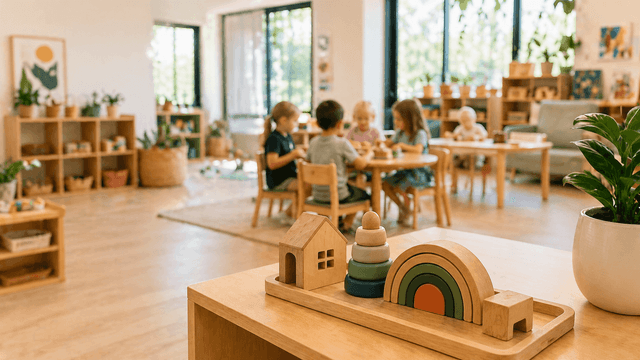
Environments tell a story. The question is: “whose story are they telling?”
In many settings, cultural resources appear during specific events and then disappear.
But when cultural safety is embedded, the environment changes more slowly and more meaningfully.
I’ve seen spaces where children return to materials over time, where their ideas are revisited, and where learning is not packed away at the end of the week.
The environment becomes something we build together, not something we display.
Culturally safe environments are not static displays. They evolve with children, families, and community connections. Resources, artwork, and symbols are used with intention not as decoration.
Authentic relationships
Cultural safety is built through relationships with children, families, and community not activities. It involves listening deeply, respecting different ways of knowing, and being open to learning from others.
It grows stronger when educators are willing to listen without needing to respond straight away.
When they pause.
When they reflect.
When they admit they don’t know, and are willing to learn and come back.
There have been moments where families shared perspectives that shifted the way we thought about practice.
Not because we asked the right question, but because we created the space for them to speak.
That’s where real learning begins.
Ongoing reflection
The biggest shift comes through reflection.
Not just asking what we are doing but asking what it means and who it is for.
In one exceeding-rated early childhood service in the ACT, this has been one of our strongest areas of growth. Through our team discussions, Yarning Circles, and everyday conversations, we noticed gaps. While we were celebrating cultural events, our everyday practice wasn’t always shifting in the same way.
That realisation wasn’t easy. It required us to sit with some discomfort and be honest about where we were at. But it also gave us clarity.
We started asking different questions:
Who are we centring in our program?
Whose voices are visible in our environment?
Who might still be missing?
That reflection didn’t lead to big changes overnight. Instead, it led to small, intentional shifts:
- more thoughtful conversations with children
- more purposeful choices in our environment
- more time spent listening, rather than leading
The “why” behind this work is simple but powerful.
If cultural safety is about children and families feeling seen, heard, and valued, then it cannot live in isolated events. It must be felt in the everyday.
Cultural safety didn’t come from doing more. It came from thinking differently and from the willingness to change.
Perhaps most importantly, this kind of reflection is ongoing. It asks educators to remain open, to question assumptions, and to continuously consider whose voices are being centred and whose are still emerging.
A Shared Responsibility, Looking Ahead
Cultural safety is not the responsibility of one person, one role, or one initiative. It is a shared commitment that lives across the entire service.
In one exceeding-rated early childhood service in the ACT, this has meant creating spaces where educators feel safe to ask questions, reflect, and grow. Leaders hold the space, but the work is carried by everyone. Educators bring this learning into their everyday interactions with children, while families and community voices continue to guide and challenge our thinking.
When this responsibility is shared, cultural safety begins to shift from something we plan for, to something we live. It becomes part of the culture of the service, not an add-on.
Looking ahead, this work does not have an endpoint. Cultural safety cannot be completed or checked off. It requires ongoing reflection, humility, and a willingness to keep learning.
The real shift happens when we move beyond good intentions and into everyday practice. When cultural perspectives are not reserved for special events, but are embedded in conversations, environments, and relationships.
That is when children not only learn about culture. But, they also experience belonging, respect, and connection.
And it is through these everyday experiences that true inclusion is realised. Not in what we plan, but in what children feel
Author
Farah Junaid is an award-winning Centre Director at an exceeding-rated service in the ACT. She is recognised through honours such as ECA Director of the Year, the Reimagine Australia National Inclusion Award, and the NEiTA National Excellence in Teaching (Team) Award across Australia and New Zealand. Farah is passionate about distributed leadership, supporting educator growth, and creating environments where every child and family feel a true sense of belonging.


Don’t miss a thing


Related Articles