




Early adaptive skills may protect children from the impacts of prenatal stress, new research finds

 Article
A new peer-reviewed study suggests that strong adaptive skills developed in early childhood may help protect children from some of the longer-term neurological impacts of prenatal stress, offering important insights for early childhood education and care (ECEC) services.
The research, led by investigators from The Graduate Center, City University of New York and Queens College, City University of New York, examined children whose mothers were pregnant during Superstorm Sandy, a major weather disaster that researchers used as a natural experiment to better understand prenatal stress exposure.
The findings add to growing evidence that while stress during pregnancy can influence child development, the early years may also offer powerful opportunities for protection, support and resilience.
Adaptive skills are the practical everyday capabilities children use to manage routines, relationships and changing environments. They include:
- communication and expressing needs
- social interaction and cooperation
- self-help skills such as dressing, toileting and feeding
- following routines and transitions
- early problem-solving
- emotional regulation and coping behaviours
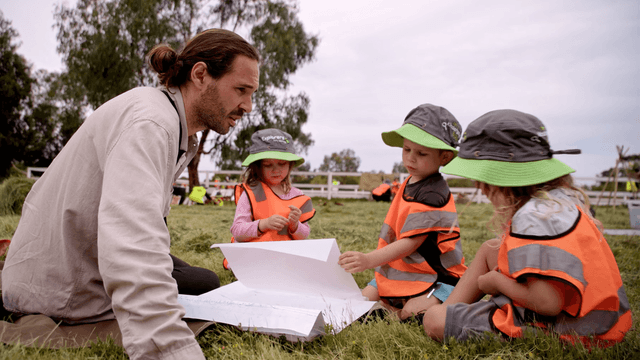
These are the very skills high-quality ECEC settings help build each day through responsive relationships, predictable routines, play-based learning and intentional teaching.
According to the study, these competencies may do more than support school readiness. They may also help buffer the developing brain from the effects of early stress.
For the sector, that reinforces a long-held truth: everyday pedagogy matters deeply.
The research team followed families participating in the Stress in Pregnancy (SIP) Study, undertaking annual behavioural assessments with children between the ages of two and six.
These assessments measured adaptive functioning across areas such as communication, self-care and social development.
At around age eight, a subgroup of 34 children also completed functional MRI (fMRI) scans while undertaking an emotional-processing task involving facial expressions.
This allowed researchers to explore how prenatal stress and early adaptive skills may interact to influence activation in parts of the brain associated with emotional regulation, sensory processing and memory.
The results were notable.
Children who had been exposed to prenatal stress but developed stronger adaptive skills showed brain activation patterns similar to children who had not been exposed to prenatal stress.
By contrast, children with lower adaptive skill development showed altered activation in emotional-processing regions, suggesting increased vulnerability.
Lead researcher Donato DeIngeniis said children exposed to prenatal stress who developed stronger adaptive skills early in life demonstrated brain responses comparable to their unexposed peers.
While individual studies should always be interpreted cautiously, the findings suggest that early adaptive development may play an important protective role.
What this means for Australian services
For Australian ECEC providers and educators, the study strengthens the evidence base behind many core practices already embedded across quality services.
Warm, responsive relationships
Secure educator-child relationships support communication, trust, confidence and emotional development.
- Predictable routines and independence-building
Daily opportunities for children to practise self-help skills, transitions and responsibility help build competence and regulation.
- Emotion coaching and co-regulation
Helping children name feelings, solve conflicts and recover from distress supports long-term coping skills.
- Early identification and intervention
Children experiencing developmental delays or signs of stress-related vulnerability benefit from timely support and referral pathways.
Increasing relevance in today’s context
The findings may resonate strongly in Australia, where many children and families have experienced significant stressors in recent years, including floods, bushfires, housing pressure, financial strain and family disruption.
For some children, early learning environments may be one of the most stable and protective settings in their lives.
That makes the role of educators especially significant.
The study offers an encouraging reminder that risk does not determine destiny.
While prenatal stress may shape developmental vulnerability, strong adaptive skills developed in the early years may help shift trajectories in positive ways.
For the ECEC sector, this is a powerful endorsement of relationship-centred, high-quality practice, where communication, confidence, independence and belonging are built one everyday moment at a time.
Explore the full research here.


Don’t miss a thing



Related Articles