


Let’s Stop Bullying campaign launches: what can ECEC learn about prevention before school?

 Article
A new Australian Government campaign is tackling bullying and harmful behaviours among school-aged children, but its focus on prevention and early intervention also raises an important question for early childhood education and care: what foundations can be laid before children reach school?
The Australian Government has launched the national Let’s Stop Bullying campaign, providing resources designed to help children and young people, families and school communities better recognise, prevent and respond to bullying and harmful behaviours.
The campaign follows the 2025 Anti-Bullying Rapid Review, which examined what was working to prevent and respond to bullying in Australian schools and where approaches needed to be strengthened.
More than one in four students in Years 4 to 9 reported experiencing bullying regularly, while 53 per cent of young people reported experiencing cyberbullying.
The changing nature of bullying was also highlighted, with reports of cyberbullying rising by 455 per cent in five years and emerging technologies creating new forms of harmful behaviour, including deepfakes, AI-generated content and image-based abuse.
At the centre of the campaign is the Let’s Stop Bullying website, which provides free, expert-developed resources for school-aged children, parents and carers.
Further resources for the school workforce are expected ahead of the 2027 school year.
Clinical psychologist and 2025 Anti-Bullying Rapid Review Co-Chair Dr Charlotte Keating said bullying had moved beyond some of the behaviours traditionally associated with the issue.
“Bullying today is no longer limited to physical shoving and name-calling in the playground. It can be quieter and less visible, but the harm it causes is very real,” Dr Keating said.
She said bullying could negatively affect a young person’s self-worth and confidence, mental health and schooling outcomes, with impacts potentially continuing into adulthood.
The Review drew on consultations with students, families, teachers, school leaders and other stakeholders across Australia.
Orygen Head of Suicide Prevention Research and Review Co-Chair Professor Jo Robinson AM said bullying could have significant implications for students’ mental health and wellbeing.
The campaign, Prof Robinson said, provides communities with tools to recognise possible signs of bullying and understand the actions available to prevent and respond to harmful behaviour early.
The campaign has been developed with support from subject matter experts, including Dolly’s Dream, the Alannah and Madeline Foundation, Cool.org and Project Rockit.
The Let’s Stop Bullying campaign is directed primarily towards school-aged children and school communities.
Its emphasis on prevention and early intervention, however, creates an opportunity for the early childhood education and care (ECEC) sector to consider what happens before school.
Young children are still developing the social and emotional capabilities that support relationships with others.
They are learning how to enter play, communicate needs, negotiate, manage strong emotions, respond to disagreement, understand another person's perspective and recognise how their behaviour affects others.
Conflict between young children is developmentally different from the repeated and intentional patterns generally associated with bullying. Labelling everyday disagreements between young children as ‘bullying’ can therefore oversimplify complex social development.
That does not mean early childhood settings have no role in prevention.
Quite the opposite.
ECEC provides an opportunity to build some of the social, emotional and relational foundations that children can carry into school and later life.
The Anti-Bullying Rapid Review describes prevention, early intervention, response and recovery as parts of a continuum.
For ECEC services, the prevention end of that continuum can be reflected in everyday curriculum and practice rather than through a formal ‘anti-bullying program’.
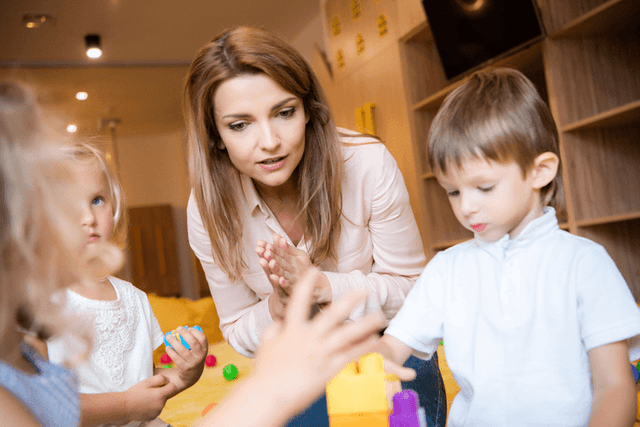
Educators can intentionally create opportunities for children to develop the capabilities that underpin respectful relationships.
This may include supporting children to:
- recognise and name emotions
- communicate needs and boundaries
- understand that other people may have different feelings and perspectives
- practise entering play and including others
- negotiate disagreements and solve social problems
- recognise when another child may be uncomfortable or distressed
- seek help from a trusted adult
- develop empathy and consideration for others
- understand fairness, kindness, consent and respect in age-appropriate ways
- experience difference and diversity as a valued and ordinary part of community life.
These skills are not taught through one-off activities.
They develop through relationships, play, conversations, modelling and repeated opportunities to practise.
Early intervention also means paying attention to what children's behaviour may be communicating.
A child who repeatedly excludes others, dominates play, uses hurtful language or responds physically during conflict may need more than correction after an incident.
Educators can observe patterns, consider the context surrounding the behaviour and reflect on what support the child may need.
Likewise, a child who regularly withdraws from group experiences, becomes distressed around particular peers or appears reluctant to participate may be communicating something that warrants closer attention.
The aim is not to label children as a ‘bully’ or ‘victim’.
Instead, educators can identify emerging patterns, support all children involved and consider how relationships, environments, routines and educator responses may be influencing what is happening.
One of the broader lessons from the national campaign is the importance of recognising harm and knowing what to do next.
That learning can begin well before school.
In an early childhood setting, children can learn that adults will listen when something does not feel right.
They can learn languages such as ‘stop’, ‘I don't like that’, ‘I need help’ and ‘can I play?’.
Just as importantly, they can experience what happens when they use those words.
When educators respond consistently, calmly and respectfully, children learn that asking for help is worthwhile and that adults can support them to navigate difficult social situations.
That sense of safety may be one of the most important foundations ECEC can provide.
Early intervention is also strengthened when educators and families communicate about children's social and emotional development.
Rather than waiting until behaviour becomes a significant concern, services can create regular opportunities to discuss friendships, emotional regulation, conflict and children's experiences with peers.
Families can also be supported with language and strategies that complement what children experience within the service.
The aim is not to make families anxious about future bullying.
It is to build consistency around respectful relationships, communication, emotional literacy and help-seeking while children are developing these capabilities.
The Anti-Bullying Rapid Review found that effective approaches require a continuum of prevention, early intervention and response.
For schools, that includes systems for recognising and responding to bullying when it occurs.
For ECEC, there is an opportunity to work further upstream.
Early childhood services cannot guarantee that a child will never experience or engage in bullying later in life. Nor should normal developmental conflict between young children be characterised as bullying.
What the sector can do is intentionally strengthen the foundations that may help children navigate increasingly complex social environments.
Supporting empathy, emotional literacy, respectful relationships, inclusion, communication, help-seeking and conflict resolution is already familiar territory for early childhood educators.
The national conversation about bullying provides another reason to recognise the importance of that work.
Prevention does not necessarily begin when bullying first appears.
It can begin years earlier, in the everyday relationships and interactions through which young children first learn how to live, play and learn alongside others.
Further information and resources are available through the Australian Government’s Let’s Stop Bullying campaign.

Don’t miss a thing


Related Articles