



97 per cent of preschool teachers say play supports academic learning, new study finds
 Article
Almost 97 per cent of preschool teachers surveyed in a US study believe play supports children's academic learning, with the new research highlighting strong professional support for play-based approaches while also revealing a potential disconnect between educators and families about what learning through play actually looks like.
Published in the Early Childhood Education Journal, the peer-reviewed study examined the beliefs of 110 preschool teachers working across urban, suburban and rural communities in two Midwestern US states.
Researchers explored three factors: teachers' own knowledge and beliefs about play and learning, their perceptions of family support for play, and the extent to which they believed their curriculum supported playful learning.
The results revealed overwhelming professional support for play.
Some 96.9 per cent of participating teachers agreed or strongly agreed that play supports academic learning, with researchers finding no significant differences in teachers' beliefs across urban, suburban and rural settings.
The findings challenge a persistent misconception that play may support children's social and emotional development but sits separately from more recognisable “academic” learning.
Lead author Erin Fox, a recent doctoral graduate in human development and family science from The Ohio State University, said this misunderstanding remained one of the biggest challenges surrounding play-based approaches.
“One of the biggest misconceptions is that play doesn't support learning,” Dr Fox said.
She said people may readily recognise the social and emotional benefits of play while being less aware of its contribution to areas such as early literacy and mathematics.
The researchers describe playful learning as an evidence-based active learning approach combining child-directed and engaging experiences with intentional adult guidance.
This distinction is important.
Play-based learning does not mean educators simply provide children with toys or activities and leave them to occupy themselves.
Instead, intentionality sits behind the experience.
Educators design environments, observe children's interests and development, interact with children, ask questions, introduce concepts and extend children's thinking while maintaining the engagement and agency that makes play such a powerful context for learning.
Study co-author and Ohio State Associate Professor Kelly Purtell said the sophisticated teaching occurring within playful experiences may not always be apparent to someone looking into an early childhood classroom.
“From the outside, it might just look like kids are playing,” Associate Professor Purtell said, but educators have intentional learning goals underpinning those experiences.
That observation points to a broader challenge for early childhood professionals.
Educators may understand the learning taking place through play, but families may not always be able to see it.
A child constructing with blocks, for example, may be exploring spatial relationships, measurement, balance, mathematical concepts, prediction, problem-solving and persistence.
Dramatic play can create opportunities for oral language, literacy, negotiation, imagination and social development.
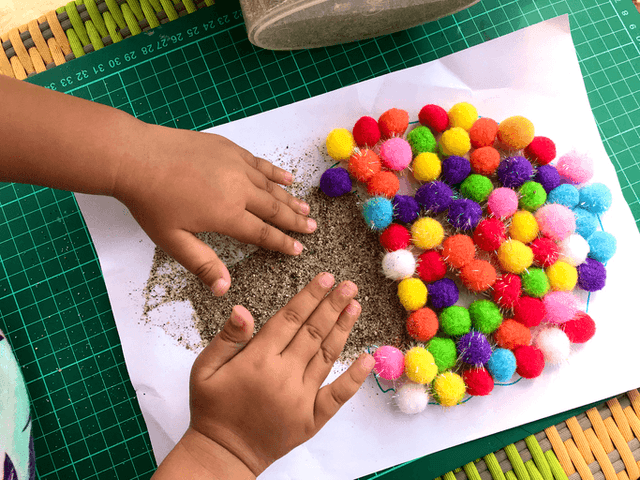
Experiences involving water, sand and loose parts can provide opportunities to experiment with volume, measurement, cause and effect, scientific thinking and prediction.
The play itself is important, but so too is the educator's ability to recognise, support and extend the learning occurring within it.
While teachers' own beliefs about play were consistent across communities, researchers uncovered a significant difference when they examined teachers' perceptions of family attitudes.
Teachers working in urban preschool settings were significantly less likely than their suburban counterparts to report that families viewed play as essential to learning.
The researchers did not establish why this difference exists.
They suggested, however, that families in urban communities may potentially have greater exposure to narratives emphasising formal school readiness and academic preparation.
The authors stressed that this was a possible explanation rather than a conclusion established by the study.
What the findings do highlight is the importance of helping families understand the relationship between play and school readiness, rather than positioning the two as competing approaches.
The research sits within a broader conversation about increasing pressure on preschool settings to prioritise direct academic instruction.
Dr Fox said research and anecdotal accounts from educators and families point to growing expectations for formal academic preparation in preschool, expectations that can potentially reduce the time available for play.
Associate Professor Purtell said educators had described families arriving at preschool with a clear expectation that their child should be learning and becoming ready for kindergarten.
Those expectations are understandable.
Families want confidence that children will have the skills and capabilities they need when they transition to school.
The issue, the researchers suggest, is broadening the understanding of how children become ready for school.
“Play-based learning is a developmentally appropriate learning strategy,” Associate Professor Purtell said.
Rather than viewing play as time taken away from school preparation, the research reinforces its role as one of the ways children can develop the knowledge, skills and dispositions that support their transition into formal schooling.
Although the study was conducted in the United States with a relatively small sample of 110 preschool teachers, the findings have clear relevance to Australian early childhood education and care.
Play-based learning is already deeply embedded within Australian early childhood pedagogy and curriculum frameworks.
But Australian educators will recognise the tension highlighted by the researchers.
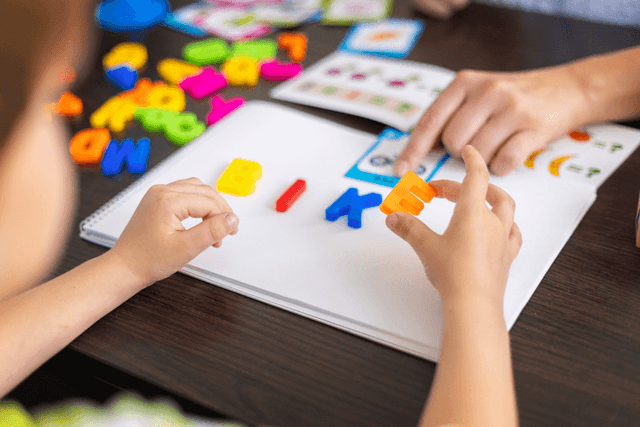
Families can understandably look for visible indicators of school readiness, letters being written, numbers being practised or other activities that resemble what they expect their child will encounter at school.
The learning occurring through play can be less immediately obvious.
For services, that makes communicating the learning behind the play particularly important.
Rather than simply telling a family that their child “played with blocks today”, educators can make visible the problem-solving, mathematical thinking, collaboration, language and persistence they observed.
Documentation can similarly explain not just what children did, but why the experience mattered and how educators intentionally supported and extended children's learning.
The research ultimately presents an interesting contrast.
The debate within early childhood education may not be about whether educators believe in play.
Almost 97 per cent of the preschool teachers surveyed already believe play supports academic learning.
The greater challenge may be ensuring that the professional knowledge underpinning play-based pedagogy is visible and understood beyond the profession.
For providers and educational leaders, that means supporting educators to confidently articulate the intentional teaching occurring through play and helping families understand the connection between playful experiences, learning and school readiness.
Because when a child is building, pretending, negotiating, experimenting, investigating or creating, the question shouldn't necessarily be:
“When will they start learning?”
The more useful question may be:
“What are they learning right now?”
Read the Ohio State University research summary via Newswise

Don’t miss a thing




Related Articles